Subject / Object with Michael David and Daniel John Gadd is an intensive, hands-on program grounded in the belief that materials, experimentation, and problem-solving are not secondary to ideas—they are central to how meaning and artistic language come into being.
Rather than placing process and technique in service of ideas, the program treats them as active forces in the work itself. Participants are encouraged to work through uncertainty, test ideas through making, and let discovery shape direction. The goal is to support work that is both conceptually grounded and materially resolved—where thinking and making evolve together.
Subject / Object is an intensive, hands-on program grounded in the belief that materials, experimentation, and problem-solving are not secondary to ideas—they are central to how meaning and artistic language come into being.
From the leading 16th century painter Agnolo Bronzino adding glass to deepen and intensify his blacks, to Jackson Pollock’s 20th century revolution pouring Duco enamel onto raw canvas to defy gravity and extend pictorial space, to Judy Pfaff using neon as a painter would, holding and sharing light—internally and externally—artists centuries have pushed their work forward by rethinking materials and supports in ways that were inseparable from who they were and what they needed to express.
Again and again, singular practices have advanced through innovation: not novelty for its own sake, but material choices that allowed something essential. The relationship between subject—who you are, what you’re wrestling with, why you make—and object—how the work is built, what it’s made of, how it behaves—is not optional. That relationship is often what enables the next step.
Rather than treating process and technique as secondary to ideas, the program treats them as active forces that shape the work itself. Participants are encouraged to move through uncertainty, test ideas through making, and allow discovery to redirect intention. Thinking and making develop together, with the goal of work that is both conceptually grounded and materially resolved.
Daniel John Gadd and Michael David anchor the program through sustained, shared mentorship rooted in their own long-term practices. Drawing from their professional trajectories, they work closely with participants to examine how innovation emerges over time—through commitment to materials, attention to constraints, and sustained engagement with unresolved questions.
Core Mentorship Focus
Sessions with Daniel and Michael will focus on:
How new materials and technical solutions emerge from specific conceptual needs
The productive role of experimentation, failure, and revision
Translating research, testing, and process into clear visual language
Strengthening work through clarity, intention, and decision-making
Michael will also lead an in-depth conversation centered on the development of his Mirror Paintings, offering a concrete example of how collaboration, dialogue, and technical problem-solving shaped both the structure and meaning of the work. This session emphasizes not just outcomes, but the messy, generative process behind them.
Guest Faculty Engagement
The program is anchored by sustained mentorship mentorship focusing on how technical solutions emerge from conceptual needs, the productive role of experimentation and failure, and translating process into clear visual language. Michael and Daniel and additional guest mentors provide focused critiques, share the evolution of their practices, and engage in open discussion around contemporary practice and professional life.
These sessions are designed to challenge assumptions, open new lines of inquiry, and help participants situate their work within broader artistic and professional contexts.
Studio Visit: Judy Pfaff
A central component of the program is an onsite visit to Judy Pfaff’s studio. This visit is not framed as a tour, but as an opportunity to learn through proximity to a living practice—observing how ideas, materials, and decisions unfold in real time.
Participants will explore:
How material choices drive both form and meaning
The relationship between process, scale, and spatial thinking
How an artistic voice develops through sustained experimentation and risk
This visit reinforces the program’s emphasis on learning through observation, conversation, and direct engagement with working processes.
Structure and Outcomes
The program balances discussion, critique, making, and direct experience. Participants are expected to actively develop work throughout the program, using mentorship, exposure to artists who’s work relates to each individual and how their innovative use of materials helped them to fully realize their voice and guest input to test ideas, refine methods, and deepen conceptual frameworks. There will be suggested reading materials that will talk to the conceptual and philosophical aspects of this crucial aspect of one’s practice.
Participants will leave with:
Greater clarity around how and why they work with particular materials
Stronger problem-solving strategies for future projects
Work that is more focused, resolved, and ready to move beyond the studio
Subject / Object is designed for artists who want to grow their practice through sustained material engagement, critical dialogue, and long-term inquiry.
There will be a culminating exhibition curated by Michael, Daniel and the guest mentors
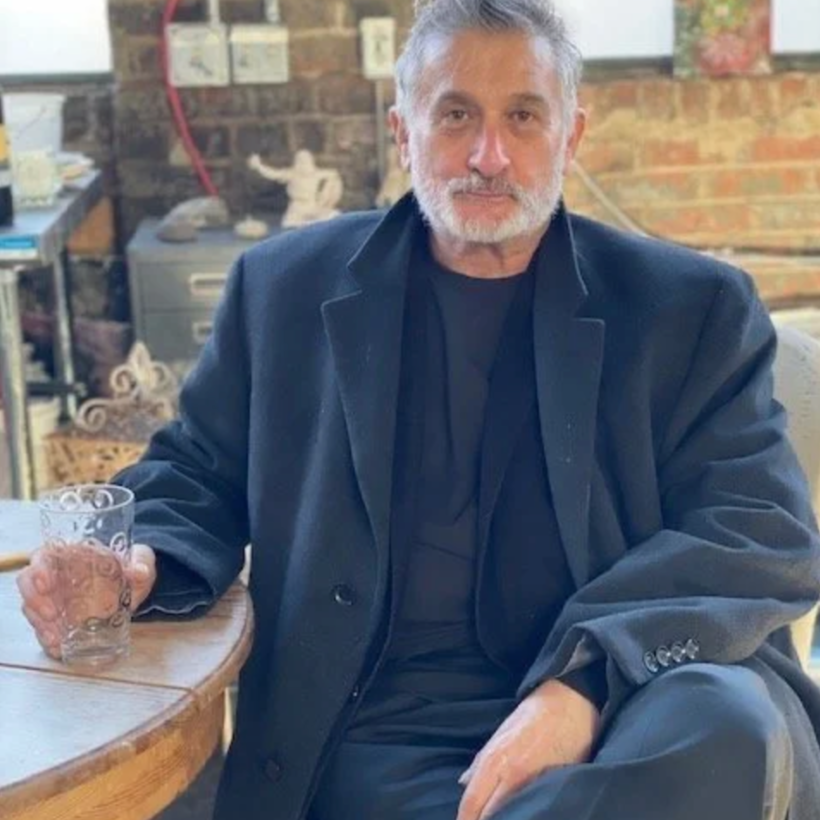
Michael David: Guggenheim Fellow, recipient of the American Academy of Arts and Letters Award, Yaddo and Edward Albee Fellow, Michael David has been exhibiting internationally since 1981, first with the historical Sidney Janis and then with M. Knoedler & Co. Exhibiting widely throughout the United States for 40 years, he has been the subject of much historical and curatorial acclaim. His most recent solo shows “The Mirror Stage” and "Night Time with Dreams and Mirror" were held at Johnson Lowe Gallery in Atlanta, GA. His work is included in many prominent private collections and the permanent public collections of the Metropolitan Museum of Art in New York, the Guggenheim Museum in New York, The Brooklyn Museum, The Houston Museum of Contemporary Art, the Denver Museum of Contemporary Art, the Museum of Contemporary Art in Los Angeles, the Los Angeles County Museum of Art, The Margulies Collection in Miami and the Edward Albee Foundation in Montauk NY, and was the subject of a one-person exhibition at Aspen Museum of Art. Considered an inheritor of Abstract Expressionism, David’s abstract work primarily centers on the use of a densely layered surface to facilitate a direct and immediate spiritual experience. He often incorporates religious iconography and symbolism, art historical themes such as the nude, and contemporary politics into his paintings, resulting in a critical dialogue between the layered abstraction of the surface and the integrated representational imagery. Over the last decade, David established the Fine Arts Workshop in Atlanta and the Yellow Chair Salon, working with artists on an immersive one-on-one basis, helping to develop their voice and professional practices, finding exhibition opportunities and taking their individual expressions to the next level. His mentorship practice expanded to include residencies and workshops in Atlanta, Dallas, TX, Truro, MA and Brooklyn, NY. He has taught painting at Princeton, was head of the Graduate Painting Department at SCAD in Atlanta, and lectured and served as a keynote speaker at many universities and art centers across the United States. Over the last 12 years, David has established, directed, and curated two of the most successful galleries in Brooklyn: Life On Mars and M. David & Co.
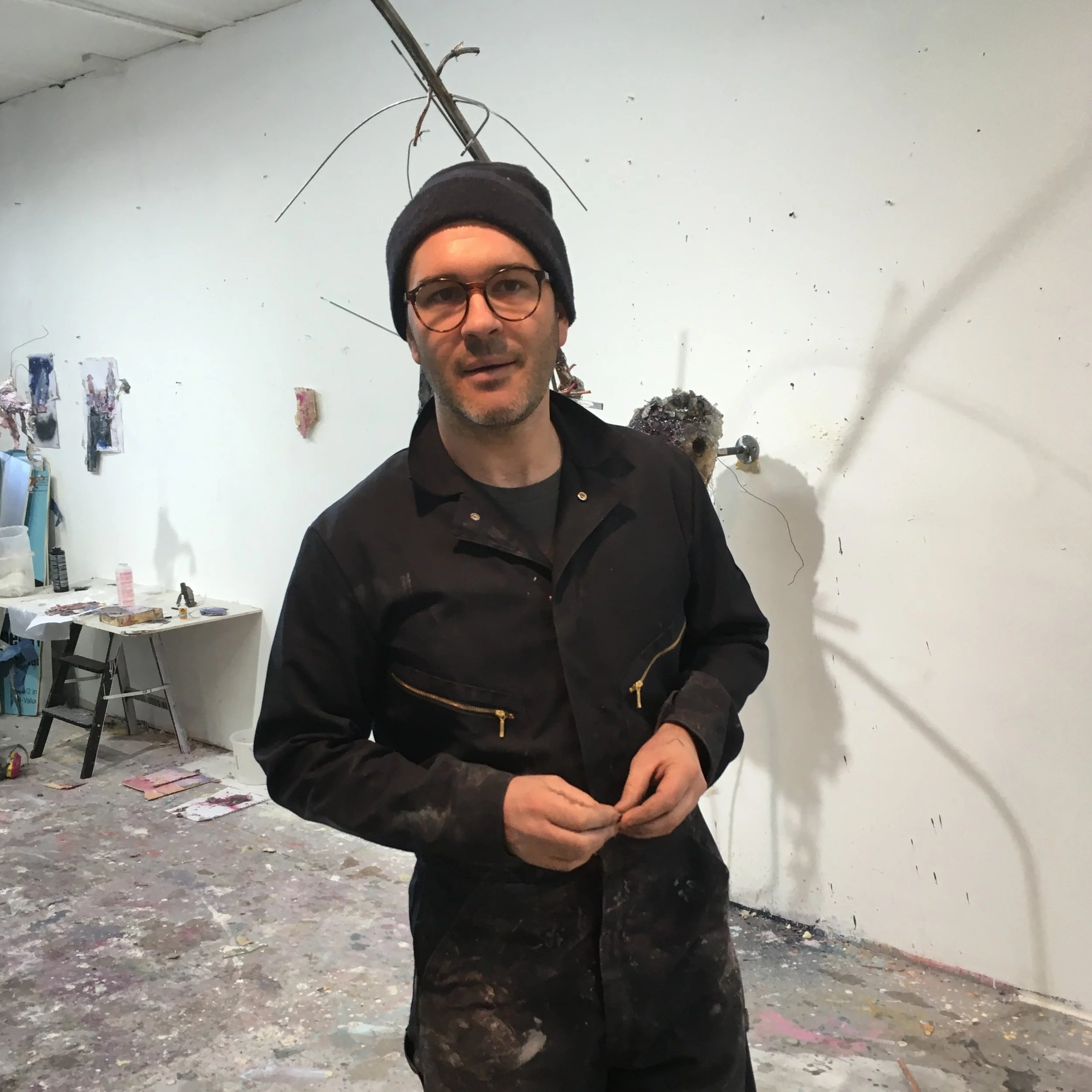
Daniel John Gadd is an artist and educator whose work centers on material experimentation, process-driven inquiry, and the ways making itself generates meaning. His practice treats materials not as neutral tools but as active agents that shape form, language, and conceptual direction. Through sustained experimentation, uncertainty, and revision, his work investigates how physical processes can reveal structure, tension, and resolution within abstraction.
Gadd’s approach emphasizes problem-solving as a critical method, allowing discovery and failure to guide the evolution of the work. His studio practice is grounded in close looking, formal rigor, and an ongoing dialogue between intuition and intention. His teaching philosophy foregrounds process as a site of learning and insists on the inseparability of material knowledge and conceptual clarity.
His most recent shows were mounted at M. David & CO. and John Davis Gallery and his work has been reviewed in Hyperallergic and Whitehot Magazine among others.